A Booklet, A Community, A Change: Fighting Health Disparities Together
In Sonoma County, California, uninsured Latino patients face an uphill battle managing chronic illnesses like hypertension and diabetes. Language barriers, limited resources, and culturally disconnected health materials have left many patients without the tools they need to truly understand, and manage, their conditions.
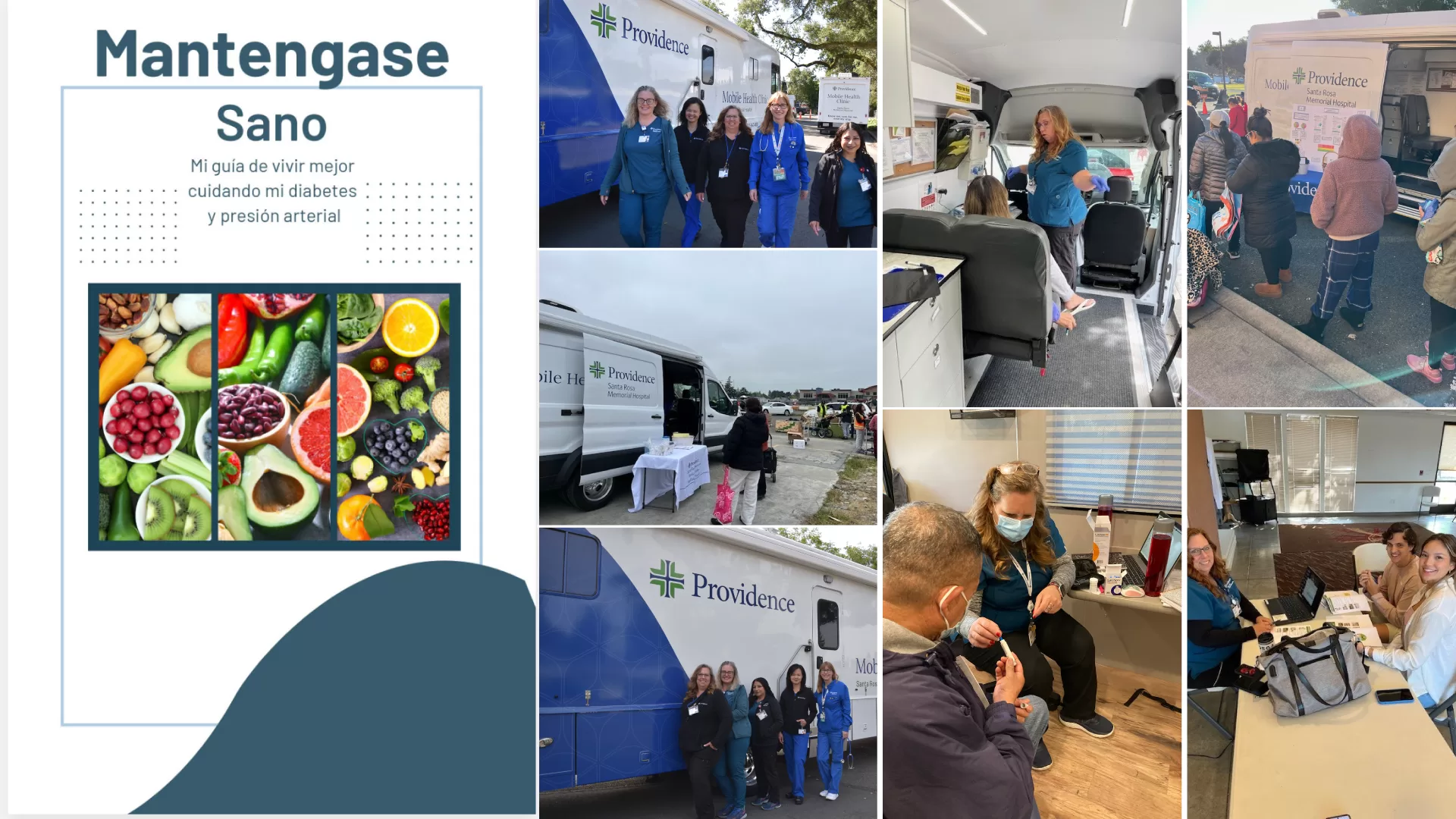
Jennifer Eid Ammons, a Nurse Practitioner and manager of the Providence Mobile Health Clinic, and Chelene Lopez, a Community Health Worker with over 30 years of experience, saw firsthand how traditional patient education was falling short. Patients would nod, politely accept generic, wordy handouts, and walk out no better equipped to manage their health. Something had to change.
And so, they created something simple, heartfelt, and profoundly effective: a health education booklet tailored specifically for their community, and the results have been remarkable.
Why It Mattered
The idea sparked from a pattern Jennifer and Chelene both recognized in their daily work. Patients’ numbers weren’t improving. A1C levels stayed dangerously high, blood pressures remained elevated, and symptoms persisted. Even when patients said they were following medical advice, the numbers told a different story.
“I remember trying to review handouts and the after-visit summaries with patients,” Chelene recalls, “but they were filled with too many words, too few pictures, and no cultural relevance. Patients would glance at them, and I knew those papers were going straight into the garbage.”
One conversation at a workshop introduced Chelene to a color-coded chart indicating normal and abnormal blood sugar ranges: green, yellow, and red. It was simple, visual, and easy to grasp. That concept stuck with her. She thought, Why isn’t all patient education this approachable?
Turning Concern into Action
What began as a collection of topic-specific handouts grew, through patient feedback and team collaboration, into a comprehensive, bilingual health booklet. Designed with large visuals, color-coding, and culturally familiar foods, the booklet explains essential topics: what A1C and blood pressure numbers mean, how to read a medication label, how to navigate the pharmacy, and what foods help or harm chronic conditions.
Unlike standard materials, this booklet was built by the people who understood the community best: the patients themselves and the Mobile Health Clinic team. Every image, phrase, and QR code to a Spanish-language walking exercise video was carefully chosen through conversations, feedback, and direct input from the people it was meant to serve.
“What makes this booklet different is that it’s practical; it speaks their language, not just Spanish, but culturally and visually too,” Chelene shares. “When I explain the QR codes, I’ll say jokingly, ‘This one will actually help you, not like those YouTube videos you’re watching now!’ And they laugh, but they get it.”
The Impact: Real Stories, Real Results
The difference has been undeniable.
Chelene recounts a patient with very low literacy, dependent on insulin for diabetes management. Through the booklet’s visual, color-coded guidance, he had his “Aha” moment. “So, is it correct that green is what I’m supposed to do, and red is what I shouldn’t?” he asked. For the first time, he connected the dots between his diet and his health.
Another patient arrived at a community screening with a blood pressure reading of 231/104 and a fasting glucose of 296. After consistent education using the booklet, her A1C dropped from 11.1 to 6.6, and her blood pressure stabilized to a manageable level.
“These moments show that the booklet isn’t just paper — it’s a tool that opens up conversations, builds trust, and empowers patients to take control,” Jennifer affirms. “It’s one of the most satisfying things I’ve experienced in my 20-plus years on the Mobile Health Clinic.”
Beyond One Booklet
This project reflects a larger truth: culturally competent, patient-centered health education isn’t a luxury — it’s a necessity. When underserved communities receive materials that reflect their culture, literacy levels, and lived experiences, real health improvements follow.
“Healthcare is so expensive in the United States,” Chelene explains. “We owe it to our patients to give them tools they can actually use. It’s disrespectful to hand someone information we know they don’t understand.”
The booklet is more than a resource; it’s a model for grassroots innovation. It challenges health systems to ask tough questions: Are we truly making an impact? Are our patients improving because of what we’re doing, or in spite of it?
Call to Action: What You Can Do
If this story resonates with you, let it be a spark.
Keep listening to your community. Your patients, neighbors, and staff have insights that matter. If something isn’t working, pause, reimagine it together, and be bold enough to question the status quo.
“There are no bad students, just bad teachers,” Chelene reminds us. “We need to help patients in the way that fits them best.”
Whether you’re a provider, a clinic manager, or a community advocate, consider creating your own culturally tailored materials. Collaborate with your community. Listen. Test. Adjust. Share. Change happens when we do the work together.