Lessons from the Field: Building and Growing Mobile Behavioral Health Programs
Practical Lessons, Partnerships, and Strategies from Mobile Health Leaders
May 2026 marks the 77th annual Mental Health Awareness Month, with this year’s theme, More Good Days Together, emphasizing the importance of collective well-being, reducing stigma, and strengthening community support. For mobile healthcare providers, that message resonates deeply.
To recognize Mental Health Awareness Month, Mobile Healthcare Association convened a conversation with leaders actively building and operating mobile behavioral health programs in rural communities. The discussion featured Tracy Goldbach and Kim Miller of Ridgeview Behavioral Health Services, alongside Jonas Cooper of Community Action Council, who is currently developing a pediatric-focused mobile behavioral health initiative in Eastern Kentucky.
Their conversation highlighted one clear takeaway: mobile behavioral health programs are not only possible — they are urgently needed.
Start with Community Need
Every successful mobile behavioral health program begins with understanding the community it serves.
For the Community Action Council, that process started with a comprehensive community needs assessment. Across rural Appalachian counties in Eastern Kentucky, behavioral health repeatedly emerged as one of the region’s most urgent concerns, particularly around family mental health and pediatric behavioral health services.
“We found that mental health was at the top of everybody’s concerns,” Cooper shared during the discussion.
Programs considering expansion or launch should begin by gathering local data and engaging stakeholders early. Community assessments, conversations with schools, childcare providers, health departments, hospitals, and elected officials can help identify service gaps and guide deployment strategies.
At Ridgeview, the organization worked directly with county leaders before launching services.
“We met with the movers and shakers of the counties,” Kim Miller explained. “We had lunch-and-learns to explain what we were doing and asked where they thought services would best benefit the county.”
That collaborative approach helped establish trust and ensured the mobile clinic was placed where patients could access it most easily.
Build Strategic Partnerships Early
Partnerships are foundational to mobile behavioral health success.
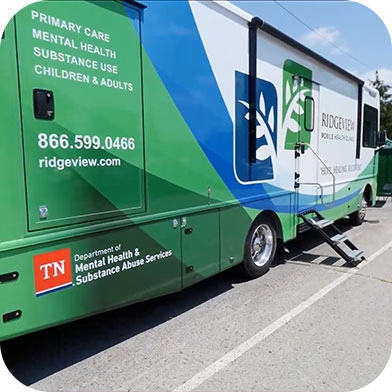
Ridgeview’s program was funded through Tennessee’s Department of Mental Health and Substance Abuse Services under Project Rural Recovery. The grant-supported model allowed the organization to provide services regardless of insurance status or ability to pay.
Their experience highlights the importance of engaging state agencies, rural health initiatives, and funding partners early in the planning process.
Programs should also explore:
– State behavioral health grants
– Rural health funding opportunities
– Community benefit partnerships with hospitals
– School and childcare collaborations
– Medicaid and managed care partnerships
– Federal and state rural health investments
For Cooper’s team in Kentucky, collaboration with childcare providers became a key pathway for engagement.
“We found that when we support the staff, the staff have the relationship with the families,” he explained. “That’s how we find our way into supporting family mental health.”
These partnerships can help programs identify patients earlier, reduce stigma, and strengthen continuity of care.
Think Beyond the Vehicle
One of the strongest themes from the discussion was that the vehicle itself is only one part of the program.
Operational planning matters just as much.
Ridgeview operates a converted 33-foot RV that includes:
– Therapy space
– Psychiatric medication management
– Primary care capabilities
– Case management
– Peer support services
The organization serves five rural counties, maintaining a consistent weekly schedule so patients always know where and when services will be available.
Consistency builds trust.
“We’re in the same county on the same day every week,” Miller said. “Everybody knows exactly where we are and when we’re there.”
Programs should carefully consider:
– Parking and site selection
– Scheduling consistency
– Patient flow
– Connectivity and internet access
– Safety planning
– Staffing models
– Referral pathways
Reliable internet connectivity was one unexpected operational challenge discussed during the session. In highly rural areas, mobile programs may need multiple cellular providers, wireless hotspots, or satellite internet options to maintain secure electronic health record access.
Flexibility is equally important.
“Always have paper copies of everything,” Miller advised. “You will need those.”
Recognizing that connectivity remains a major challenge for many mobile programs, and in the spirit of “Meeting the Moment,” we are highlighting the Jerry McLarty Connectivity Grant, supported by Peplink and West Networks, which helps organizations strengthen secure internet access and telehealth capabilities in the field. Applications are due June 9, 2026. Additional details are available on the Mobile Healthcare Association Awards & Grants page.
Staffing Matters — and Culture Matters More
Behavioral health work is demanding, and mobile settings add another layer of complexity.
The Ridgeview team emphasized that hiring the right people is critical — not only clinically, but personally.
“You really need people who are good at knowing they’re going to be around the same people all day, every day,” Miller said.
Because mobile teams often work in close quarters and spend hours traveling together, collaboration, communication, and adaptability become essential traits.
The Ridgeview team intentionally built a culture centered on humor, mutual support, and flexibility.
“We are very goofy,” Miller laughed. “You become your own little family.”
The conversation also highlighted practical staffing considerations:
– Leveraging existing brick-and-mortar supervision structures
– Utilizing nurse practitioners and licensed clinicians
– Incorporating peer support specialists
– Cross-training team members
– Planning for backup transportation and emergency coverage
Programs connected to existing clinics may have an advantage by using established supervisory relationships and referral systems.
Prepare for Crisis — Even If You’re Not a Crisis Program
Many organizations considering behavioral health expansion worry about handling behavioral health crises in a mobile setting.
The speakers emphasized that preparation and partnerships are key.
Ridgeview developed strong relationships with local crisis response teams and mobile crisis providers before launching services.
“If something occurs, you can call them,” Miller explained. “They know who you are, and you can have a warm handoff.”
Clear signage and communication also helped distinguish their clinic from a mobile crisis response unit. Patients understood the program’s role as a provider of ongoing behavioral health and primary care services.
Equally important was staff training in:
– De-escalation techniques
– Trauma-informed care
– Situational awareness
– Emergency response protocols
Interestingly, the team reported very few safety incidents over nearly three years of operation.
“A lot of it is preparation and being able to de-escalate before we get to a crisis situation,” Tracy Goldbach shared.
Mobile Behavioral Health Reduces Barriers
One of the most powerful moments in the discussion centered on how mobile care changes the patient experience.
For many patients, especially those with anxiety or trauma histories, walking into a traditional clinic can feel overwhelming.
The mobile environment often feels different.
“You’re not sitting in a waiting room with 15 or 20 people,” Miller said. “People feel very relaxed.”
Some patients even shared that they could not imagine returning to a traditional clinic setting after experiencing care through the mobile unit.
That accessibility — both physical and emotional — is one of mobile healthcare’s greatest strengths.
Lessons Learned: Start Small, Stay Flexible, Keep Going
For organizations considering a mobile behavioral health program, the panelists offered simple but powerful advice:
Do it.
“The need is overwhelming,” Miller emphasized. “People need options. They need help. And if you can help just a little bit, do it.”
The conversation reinforced that successful programs are built through:
– Community engagement
– Strong partnerships
– Operational flexibility
– Compassionate staffing
– Consistent presence
– A willingness to adapt
No two programs will look exactly alike — and that is okay.
What matters most is creating access where access does not currently exist.
Join the Conversation: Behavioral Health Special Interest Group
As mobile behavioral health programs continue to grow nationwide, collaboration among peers remains essential.
The Mobile Healthcare Association’s Behavioral Health Special Interest Group (SIG) serves as a collaborative learning hub and support system for mobile health professionals looking to improve access in the field of mobile behavioral health. This SIG fosters the exchange of best practices to enhance mental health and substance use programs in the mobile healthcare setting.
The Behavioral Health SIG meets virtually quarterly to discuss emerging topics, operational strategies, and lessons learned across the field.
Upcoming Meeting
2026 Q3 Behavioral Health Special Interest Group Meeting
Monday, September 28, 2026
In-person at the Annual Conference
Attendees will have the opportunity to connect directly with leaders featured in this conversation. Kim Miller shared that the entire Ridgeview mobile behavioral health team plans to attend the conference, giving participants a chance to meet the staff behind the program and continue these important conversations in person. Attendees will also be able to connect with Jonas Cooper to learn more about Community Action Council’s journey in developing a pediatric-focused mobile behavioral health initiative in rural Kentucky.
For organizations beginning their behavioral health journey — or expanding existing services — the SIG provides an opportunity to learn directly from peers navigating similar challenges and opportunities across the mobile healthcare landscape.